


Today, no one would argue that cinema as such in the United States was born in New York, or, to be more precise, in Brooklyn. It was here that the first film company was created, which within a year became the most profitable in America. The only thing that can be argued about is what prompted the film industry, which originated in New York and partly in Philadelphia in the early 1900s, to move to California to a large extent. There are many options here, but read more about it on brooklyn-trend.com.
The first silent movie
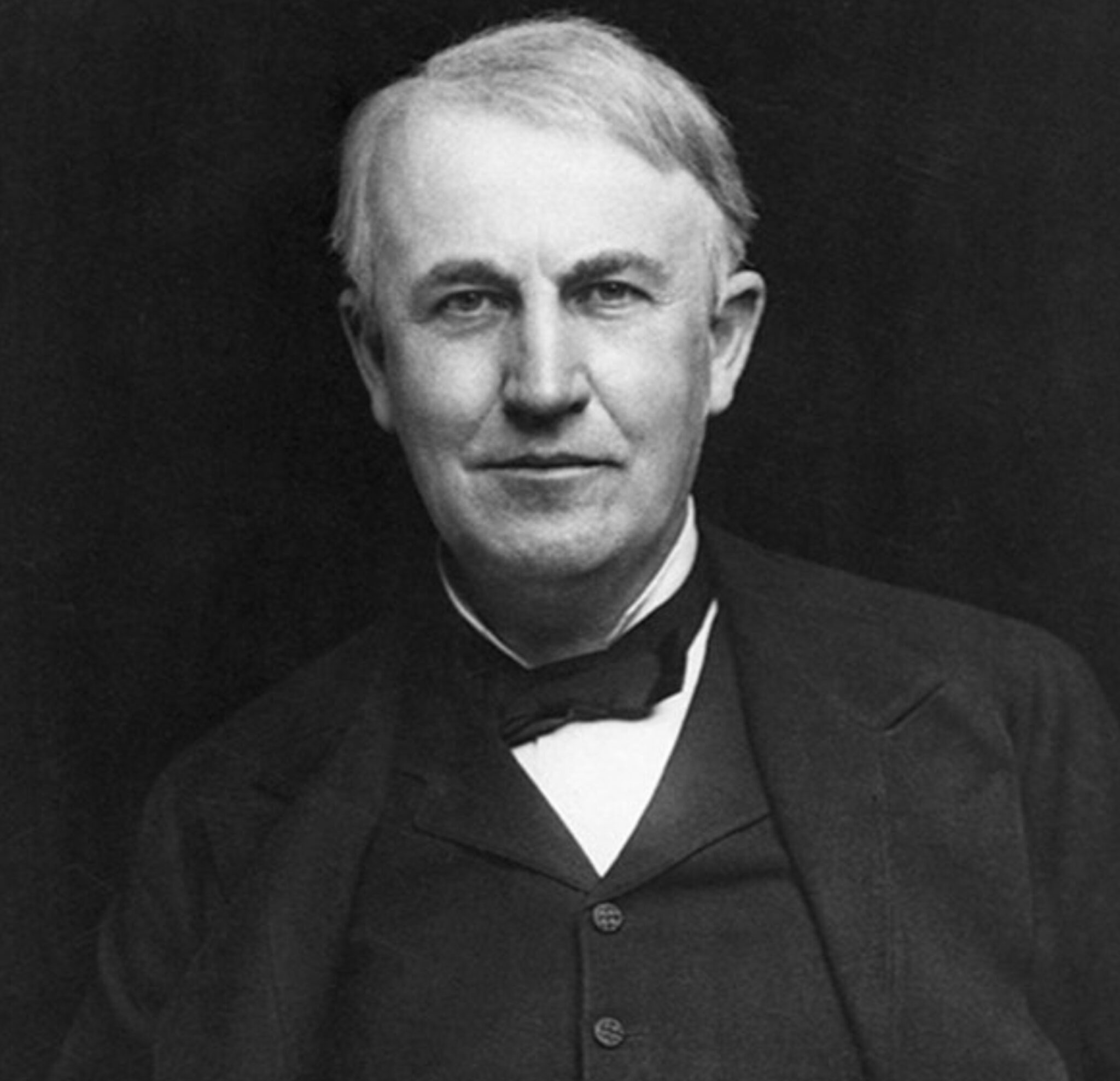
To begin with, the story of Charles E. Chinnock, a native of London and a resident of Brooklyn, is not very well known. This man challenged the magnate inventor Thomas Edison himself. What happened was that Charles came to Thomas and got a job as a telephone specialist.
He was so good at his job that Edison soon engaged Chinnock to work on other important projects. He was put in charge of the Edison Electric Illuminating Company of Brooklyn, which, as the name implies, was going to electrify the streets of Brooklyn.
However, it so happened that Charles Chinnock had a bad falling out with the inventor, quit his job, and went on to do his own thing. The former Londoner set about making his own version of the kinoscope. It should be noted that such quarrels with subordinates were almost the norm for Edison.
Be that as it may, in the 1890s Charles Chinnock managed to become, to a certain extent, albeit not a significant one, a competitor of Edison, precisely in the New York market of kinetoscopes. And even though Edison was the first to show his unit to the public, what Chinnock invented was already decorating the saloons of Coney Island after a while. It was Charles Chinnock’s kinetoscope that stood in the lobby of the Eden Museum in Manhattan.
The next step was to find films to show. At that time, only two people in New York could show them, and even fewer could make them. Edison himself, of course, would not have given his films to Chinnock under any circumstances. So, living in Brooklyn in a townhouse on Sixth Avenue, he decided to create his own makeshift studio.
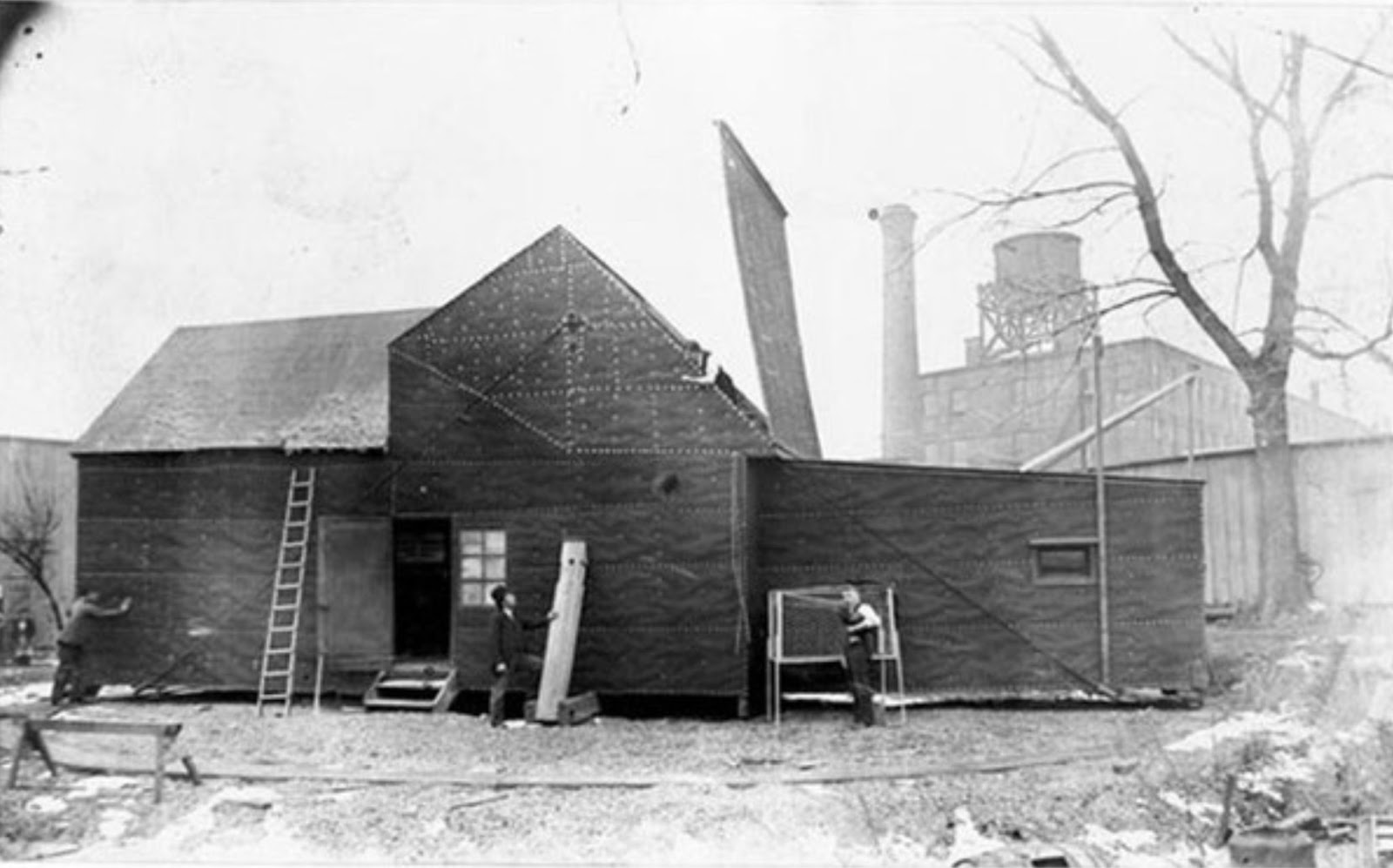
In November 1894, Chinnock began making films for his own version of the kinetoscope. He chose the rooftop of a house at 1729 St. Marks Avenue as the location for his films. The studio of the newly minted filmmaker on the roof was said to be very similar to the “Black Maria” studio created by his former boss. That is, it was a small room with black walls to capture as much natural light as possible.
At the same time, the space itself, in the middle of which the characters of the movie could be placed, was very small and could accommodate only a few characters. But every cloud has a silver lining. Because of its compactness, it was convenient to film the boxing. After all, there were two heroes, they were fighting in a space limited by the ring, and it was an exciting, full of movement, with an unpredictable ending.
And given that Edison had already filmed a boxing match, Chinnock decided to do the same. Two athletes, James W. Lahey and Chinnock’s nephew, Robert T. Moore, were chosen for the film. Neither of them had any significant sporting achievements, but the fight between them was filmed, and the film was quickly produced and distributed among kinetoscope operators.
Later, Charles Chinnock continued to copy Edison’s films. He filmed his own story of Edison’s blacksmiths, several dancers at work, and even a cockfight. Chinnock, of course, did not become a household name in cinema. Eventually, Edison and others pushed him out of the movie business. He died in his home in 1915. But the fact that he made the first movie in Brooklyn will remain a fact.
Brooklyn’s contribution to the film industry
Thus, this case confirms the fact that even decades before Hollywood became synonymous with the big screen, New York was the cradle of the nascent film industry. In general, the first 30 years of cinema can be characterized by the growth and consolidation of the industrial base, the establishment of narrative form, and the improvement of technology.
In this context, it should be noted that Brooklyn made a significant contribution to the development of the film industry. The well-known film company The Vitagraph, which was one of the first to be established in the United States, became the most profitable film company in the United States within a year.
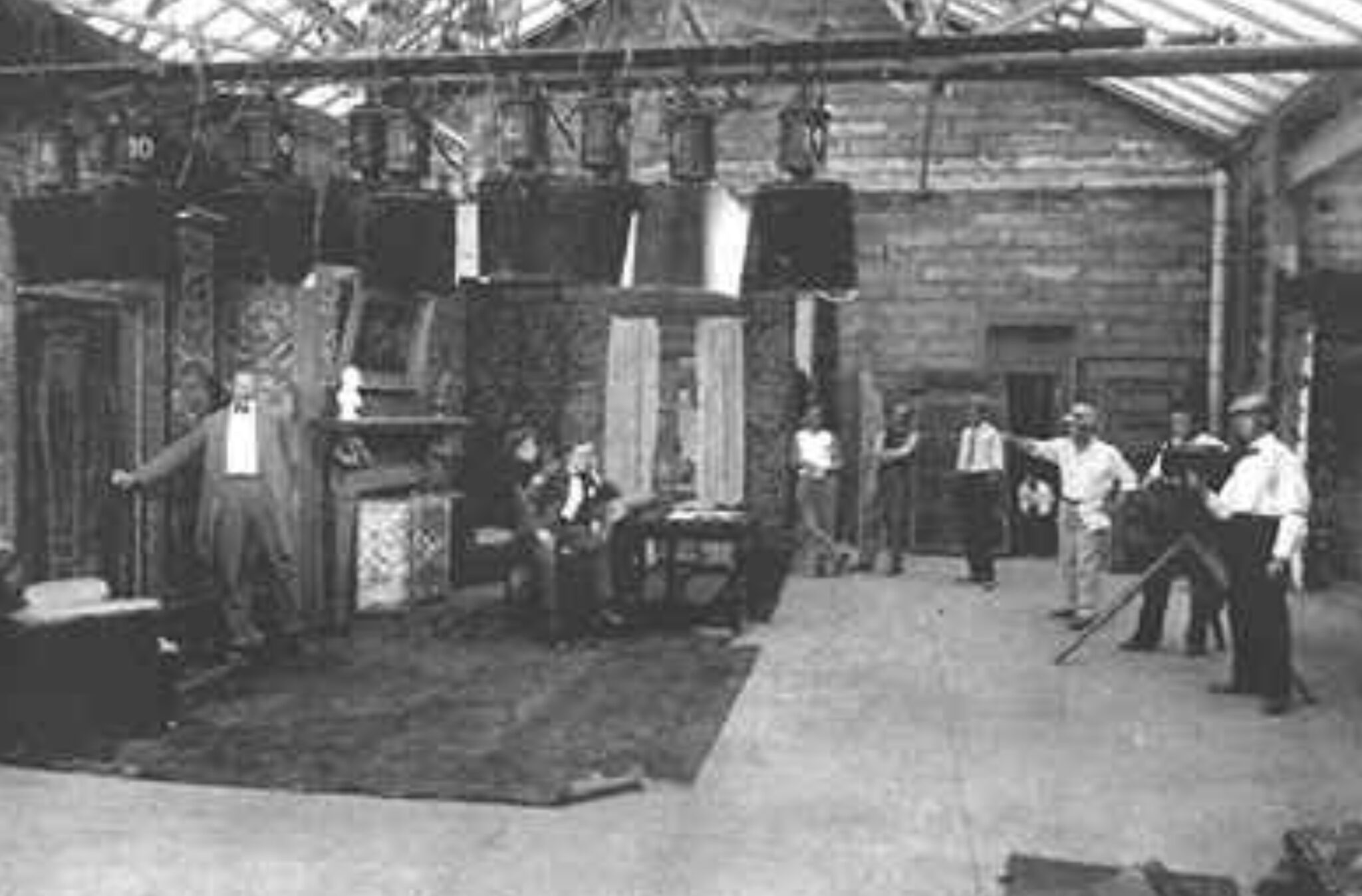
It was The Vitagraph that could boast of being the first to construct a glass studio. This studio tank was used to film battle and sea scenes with marine life. The company could also boast that it was one of the first to create costume and set design workshops, huge editing and processing rooms, and, of course, luxurious sets.
And more advanced equipment meant that more films were made to meet the demand of moviegoers.
The Great Migration
However, with the onset of the Great Depression, film production moved west. There are many reasons cited for this massive and rapid migration from New York to California. These range from differences in weather, which did not favor New York, to escape from the patent war declared by Thomas Edison.
It is said that California’s weather was the main driving force that prompted film industry workers to settle in sunny California in the early 1900s. And the key word here is sunny. After all, given that a lot of light was needed to properly expose films, could there be a better place, without the cold and storms, with the added bonus of over 300 sunny days a year?
That’s right, one of the inexpensive ways to get the necessary amount of light was to use natural, bright, sunny light, which was not always available in New York. And although an alternative was used at the time — arc lamps — they produced a large amount of ultraviolet radiation, which could cause photokeratitis.
In contrast, the sun in Southern California was readily available, and land around Los Angeles was quite cheap at the time. This meant that it was possible to purchase or rent large plots of land for the construction of indoor film sets.
Another reason for this migration was the variety of locations. In California, it was possible to film deserts for biblical films, scrubland for westerns, mountain and snow locations, ports and naval bases for military and pirate films, farms with orchards, ranches, and so on.
Back to the roots
In the mid-1950s, New York City Mayor John Lindsay, who was involved in theater circles, decided to turn back the clock by encouraging the film industry to return to what he considered its roots. Lindsay created an office whose goal was to revive the film industry in the city.
Specifically, the newly created agency, known as the Mayor’s Office of Film, Theater, and Broadcasting, was to streamline the filming process by becoming the sole center for obtaining filming permits. The mayor also created a specialized police unit to resolve logistical complications that might arise during on-location filming.
As a result, film and television exploded, becoming an industry worth nearly $9 billion and providing jobs for 130,000 New Yorkers.
Sources: