


Until recently, Brooklynites who wanted to see a famous indie band or another well-known act often had to cross the river to attend concerts at large Manhattan clubs like Webster Hall or Irving Plaza. However, everything changed when Brooklyn-born band LCD Soundsystem settled in for five nights starting in April 2017 at a new venue—Brooklyn Steel, a club with a capacity of 1,800 located in East Williamsburg. As it turned out, music had long been one of the borough’s biggest cultural exports, so why not have its performers, for a change, “hang out” at home? Read more about this major new Brooklyn concert hall at brooklyn-trend.com.
The Industrial Style of Brooklyn Steel
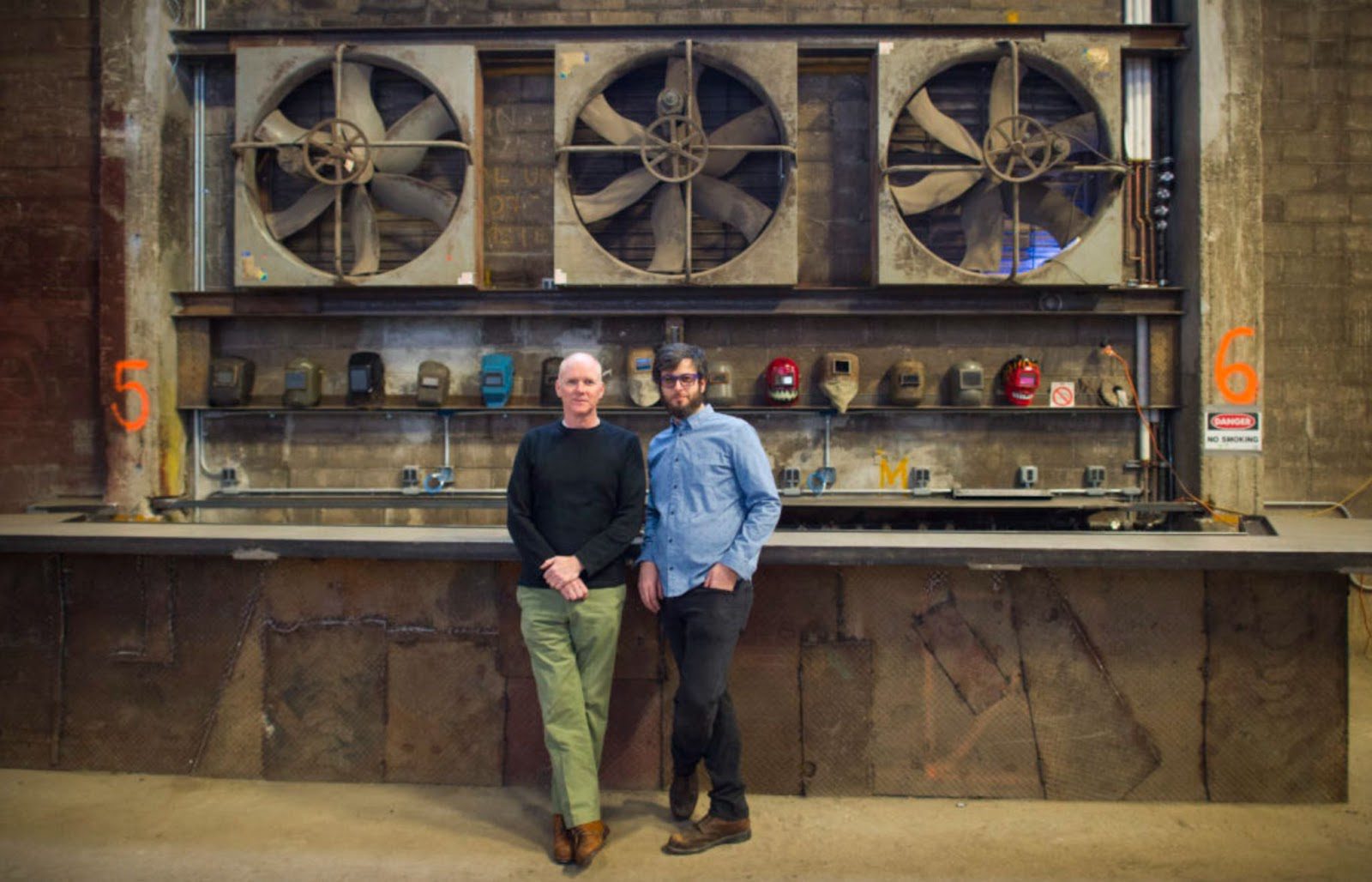
In the spring of 2017, leading New York-based national concert promoter The Bowery Presents opened its new 20,000-square-foot concert venue, Brooklyn Steel, in East Williamsburg, New York. The 1,800-seat music venue includes a main floor, a balcony, 40 restrooms, and three bars. Its rather straightforward name reflects both its industrial past and present aesthetic. This was once a fully functional steel manufacturing plant, and much of the original building’s steel was repurposed for Brooklyn Steel.
Welders worked on steel beams, and construction workers in hard hats entered the cavernous former steel plant. But this time, the work wasn’t for heavy industry—it was for a new kind of industry thriving in Williamsburg: nightlife. The building at the corner of Frost Street and Debevoise Avenue, which opened as planned in April, became one of the borough’s largest concert halls, with a capacity of 1,800 people. The venue was designed to host performances by indie rock stars such as PJ Harvey, The Decemberists, and Pixies.
Brooklyn Steel is the latest project from The Bowery Presents, a New York concert promotion company that, over two decades, has grown from a single club in Manhattan—the intimate Mercury Lounge—into one of the most influential independent promoters in the country, with clubs and concert halls stretching from Maine to New Orleans.
The Bowery Presents, both independently and with affiliates, had already been organizing about 140 concerts per month in New York, making it the city’s dominant local promoter. Jim Glancy and John Moore, the company’s executives, believed that Brooklyn Steel—set to become the borough’s largest general concert venue—would fill an important gap in New York’s music scene.
Brooklyn’s Largest Concert Venue
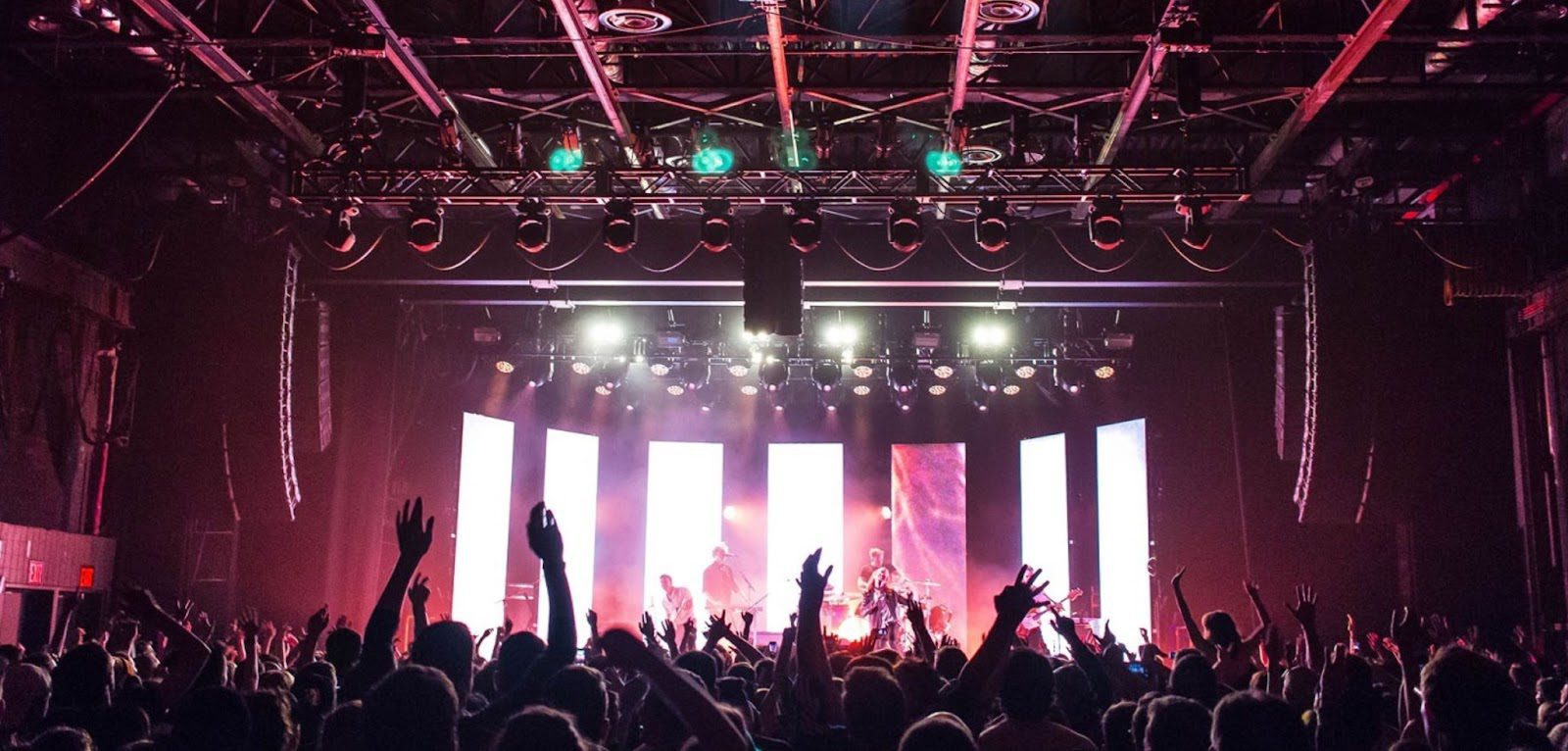
Designed in an industrial style, Brooklyn Steel boasts an unmistakably urban aesthetic: four-foot fans from the former steel plant hover above the lobby bar, while a movable 39-by-24-foot stage allows for flexible setups. Despite its rugged industrial appearance, the venue was built with modern amenities and in strict compliance with building regulations.
At the start of the project, everyone understood that converting a 20,000-square-foot former steel plant into a world-class live entertainment venue could present numerous challenges, particularly given the expected audience size. The building at 319 Frost Street was still an operational industrial workshop, Eliou and Scopelitis Steel Fabrication, when Jim Glancy and his partners first scouted the neighborhood for a venue. He later recalled being struck by the space and its proximity to what they considered Brooklyn’s base of music fans. During planning and construction, the company worked closely with Community Board 1, promising to integrate into the neighborhood and balance residential and commercial interests.
A team of designers and engineers from The Bowery Presents developed the venue based on a similar space, Terminal 5, a 3,000-capacity venue in Manhattan also run by the promoter. The goal was to expand both the stage and audience capacity while addressing noise control and the surrounding neighborhood’s concerns. According to Scott Raywalt of The Bowery Presents, they needed to contain high-volume audio inside the venue while meeting New York City’s stringent noise regulations outside. The challenge was to create an entirely new sound system that delivered predictable results with no room for error.
Décor, Scalability, and Soundproofing
To address the issue of scaling the stage to suit different audience sizes, they repurposed an overhead gantry crane with remote control, a remnant of the site’s steel manufacturing days. This allowed for the movement of massive rigging grids as well as a 50,000-pound steel-and-concrete movable stage. Using predictive modeling software, they determined the optimal placement for the stage and crane.
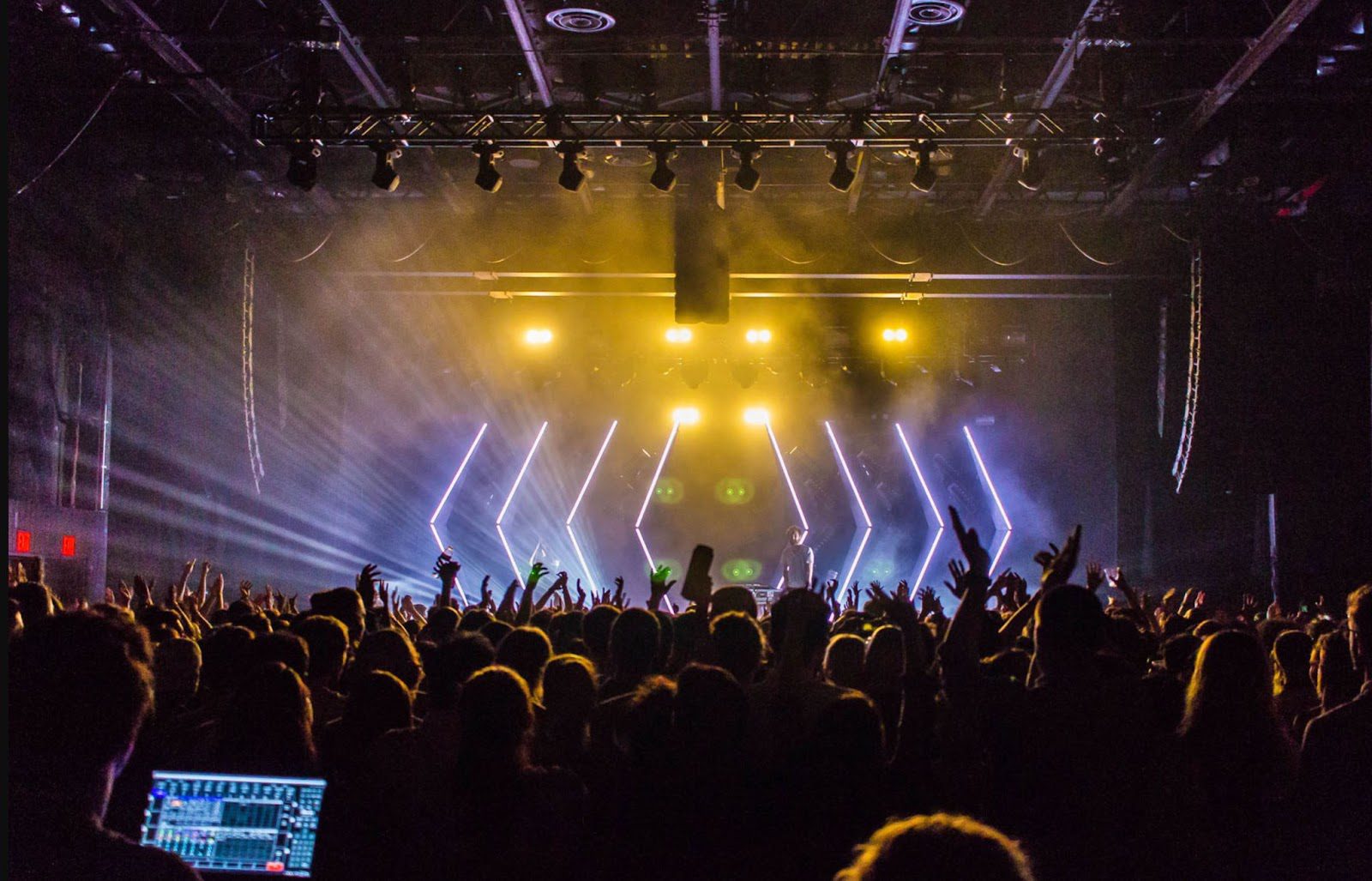
Brooklyn Steel was designed not only with sound quality in mind but also with optimal sightlines. For those stuck at the back of the crowd, a raised false floor was installed to improve visibility, and mezzanine levels were added for a bird’s-eye view of performances. If you plan to attend a concert here, sneakers are advisable—the walk from the subway station to Terminal 5 in Manhattan takes about 15 minutes, so Brooklyn Steel’s location, just half a mile from the Graham Ave L station, is a far more convenient trek, typically under 10 minutes on foot.
Regarding décor, many elements from the building’s industrial past were incorporated into the design. The main lobby bar was constructed from scrap material salvaged from the original workshop and features repurposed ventilation fans. Remnants of the old gantry cranes serve as both stage components and architectural accents framing the lobby bar. Additionally, a five-ton crane hook now suspends artwork from a local artist. Brooklyn Steel also boasts a green roof, though don’t expect rooftop cocktails—it functions more like the green roof at Barclays Center, an eco-friendly solution for sound insulation.
Indeed, the green roof proved to be the best option for soundproofing. It allowed the team to exceed standard building code requirements, creating a substantial air gap that effectively dampened noise. The roof’s mass, combined with this air pocket, effectively contains sound within the venue. Windows along one side of the building, facing nearby residential properties, were replaced with concrete blocks, and additional acoustic treatment was applied to the interior.
Who Plays at Brooklyn Steel

When Brooklyn Steel opened on April 6, 2017, it kicked off with five sold-out shows by American rock band LCD Soundsystem. Soon after, the venue announced 30 additional shows featuring talents like The Decemberists, PJ Harvey, Chairlift, Goldfrapp, Whitney, Mitski, Tycho, Slowdive, The Jesus and Mary Chain, and others. The venue quickly became one of the premier club entertainment spaces, earning a spot in Rolling Stone magazine’s list of the top ten best concert venues in America in 2018. Much of its acclaim was due to its exceptional sound quality, provided by L-Acoustics.