


On November 24, 1928, the Brooklyn Paramount Company introduced something never before seen, not only in Brooklyn or New York, but more than that, even in the United States and around the world. It was a whole new word in the world of entertainment. That’s right – a word. We are talking about the world’s first cinema built for watching sound movies. Read more about it on brooklyn-trend.com.
Cinema for movies with sound
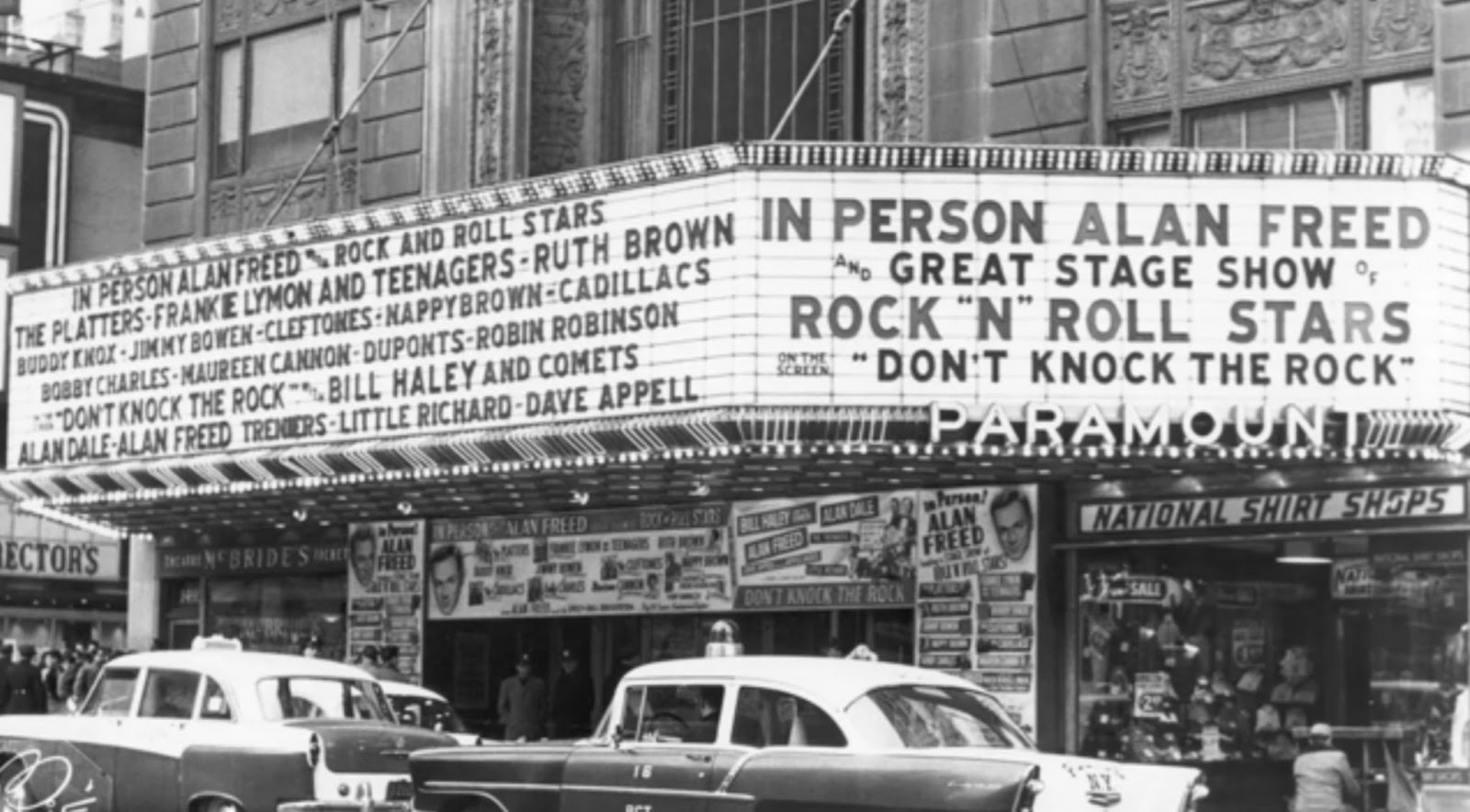
The opening of the brand-new venue sparked a crowd of eager people to see it with their own eyes and hear it with their own ears, stretching along the entire block. They left behind everything that had brought them joy before for the Baroque palace, which promised stunning spectacles and groundbreaking performances.
Billed as the first movie theater in America’s “built for sound,” Brooklyn Paramount could not leave its face in the mud, so it set the stage for the legendary saga. As a premiere, they screened a long-lost cinematic masterpiece from the jazz era. It’s about Manhattan Cocktail, a movie that is known to have been directed by the only female director in Hollywood at the time, Dorothy Artzner, with Nancy Carroll.
In fact, it was a silent movie that was diluted with sound effects. Prior to that, as was the custom in those days, the Paul Ashe Ensemble, Maria Gambarelli, and Eddie Cantor performed on stage in That Certain Feeling, a ten-act stage play featuring violinist David Rubinoff.
The entire performance was directed by John Murray Anderson. In addition, there was an organ, double Wurlitzer 4 Manual 26 Ranks were opened by organists Henry Mertag and George A. Johnson.
That’s how the Brooklyn Paramount was opened – a magnificent movie palace with 4201 seats. Of curiosity, it should be noted that it opened only three months after the opening of the huge Fox Theater with 4088 seats, which was located almost directly across from the Flatbush Avenue Extension.
Fierce competition
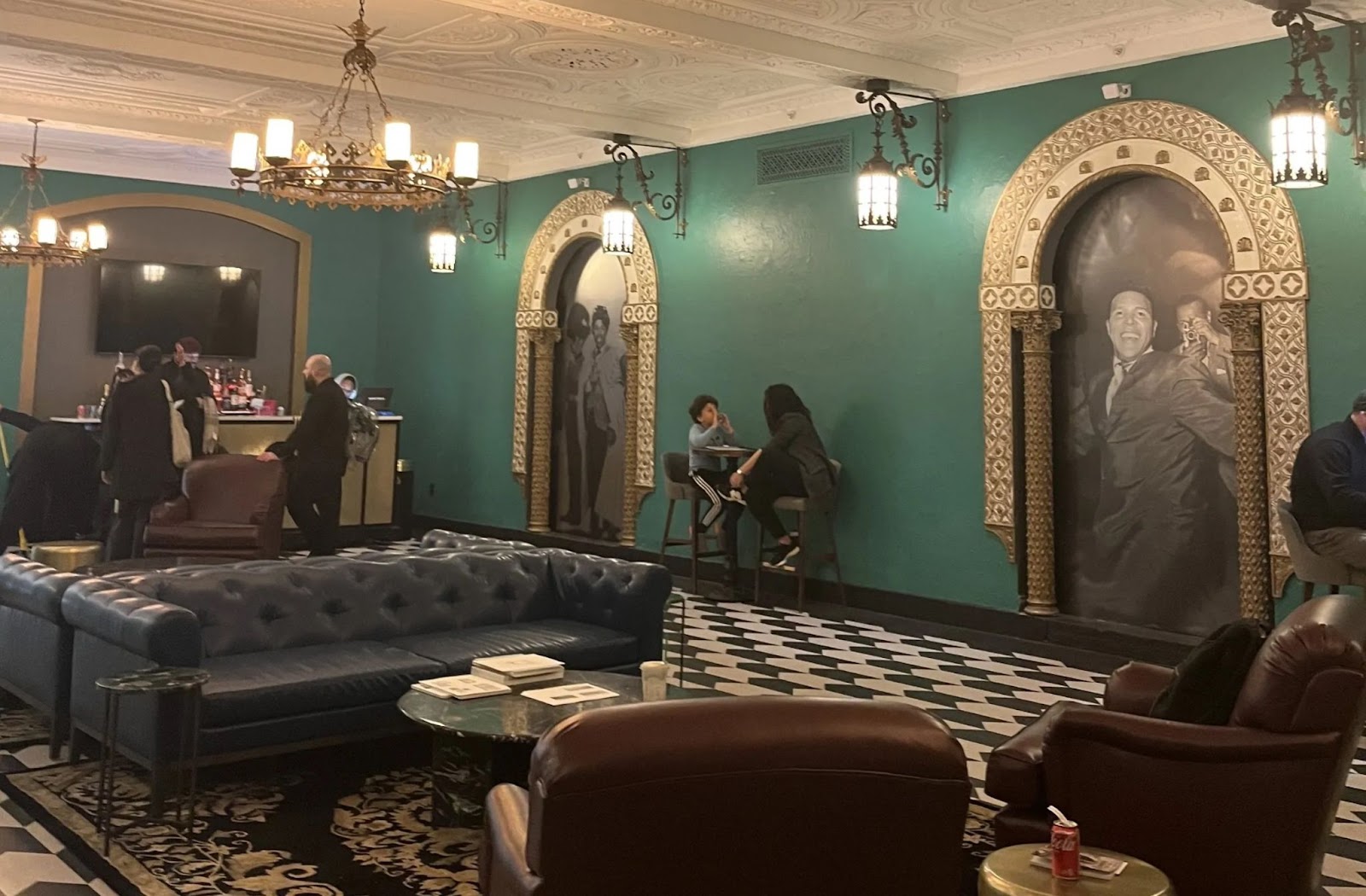
In retrospect, despite some initial audience excitement, the Brooklyn Paramount was never a financially successful theater. This was perhaps due to the fact that it had to compete with other neighboring theaters, of which there were many.
For example, the Metropolitan Theater, which was designed for more than 3.5 thousand seats, the Albee Theater with more than 3.2 thousand seats, the aforementioned Fox Theater with more than 4 thousand seats, and the Strand Theater with almost 3 thousand seats. All of these theaters were located just a few minutes’ walk from the Brooklyn Paramount.
There were even thoughts that perhaps the Brooklyn Paramount was redundant. For example, until April 1933 it was closed for 4 months, and then from May 1934 it was closed again until the fall of the same year. But after the next reopening in the fall, they began to show only films.
A few words about the exterior of the Brooklyn Paramount, where a certain part of the Brooklyn audience dreamed of going. The main part of the auditorium was hidden from view on the Flatbush Avenue Extension by a rather brutal multi-story office building, which gives the cinema a 1950s look, but not the architectural style that was characteristic of the late 1920s building.
Originally, a huge sign for the cinema was installed on the roof of the building, as well as above the small corner entrance, which was “hidden” under a tent, with two huge vertical signs on both sides.
The most striking among the rest
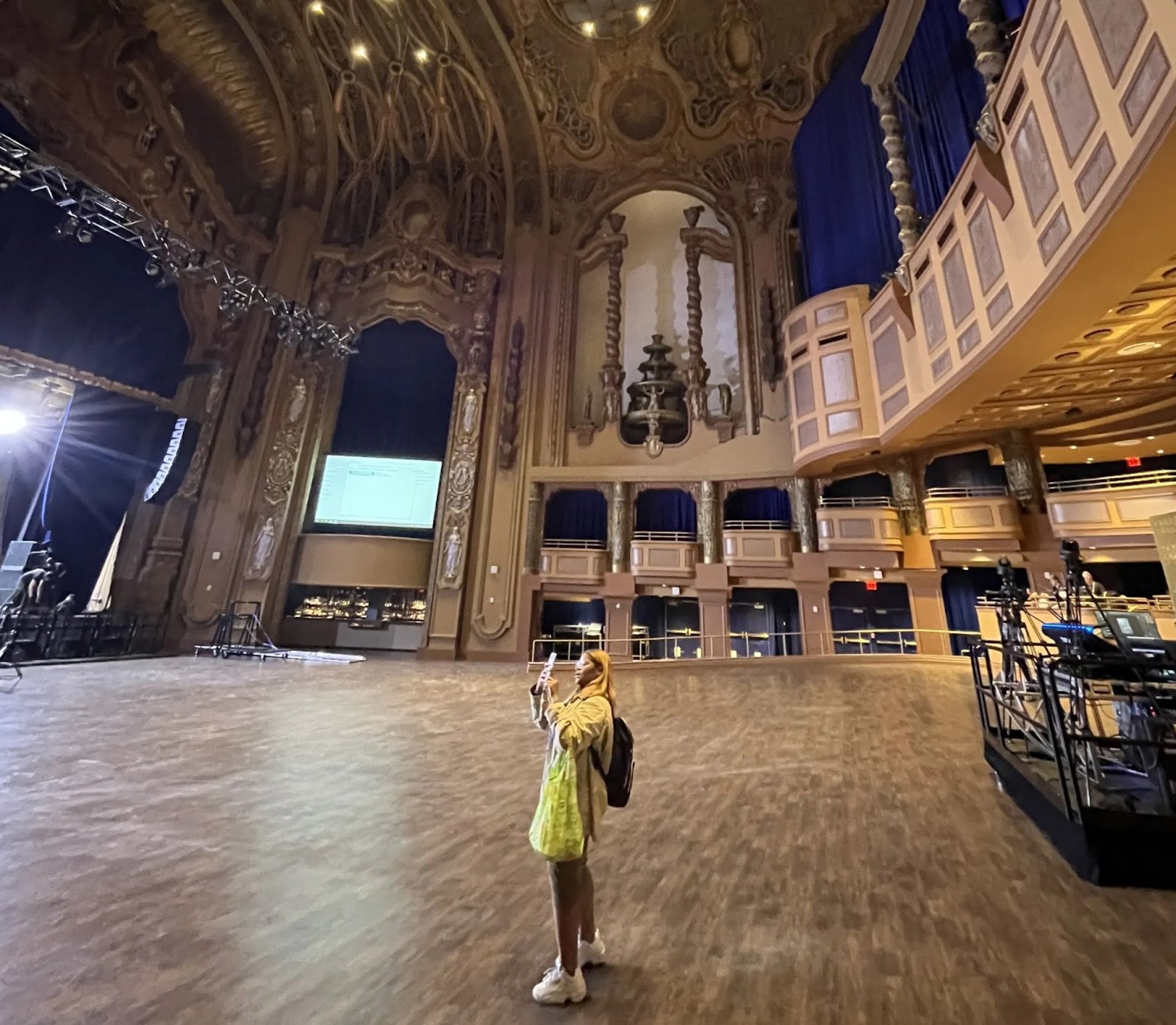
Despite its strong competition, Brooklyn’s Paramount movie theater is considered one of the most striking of all theaters, designed by the Chicago-based architectural firm Rapp & Rapp under the direction of Edwin C.A. Bullock. His company operated out of the firm’s New York office.
The grand lobby, although grand and spacious, remained quite simple compared to the interior of the hall. Here, on the side walls, there were large bay windows and gazebos decorated with columns and urns with a simple wall behind.
Initially, a projected image was shown through these bay windows. Thus, the audience had the illusion that they were looking through the arches at the front gardens of the French royal palaces of the eighteenth century, just as the kings did. The ceiling was a painted blue dome, symbolizing the sky, under which a perforated trellis was suspended.
As for the auditorium, it was decorated in the French Baroque style. It had 2018 seats, 434 on the mezzanine and 1749 on the balcony. The Brooklyn Paramount hosted many of the brightest stars of the time.34 Among them were Buddy Rogers, Eddie Cantor, George Jessel, Mae West, and Rudy Vallée.
A few years after its opening, in 1931, Duke Ellington and his orchestra introduced big band jazz to Brooklyn. This group paved the way for a multifaceted wave of revolutionary musical genres, including R&B, doo-wop, and soul.
In the 1950s, the Brooklyn Paramount fearlessly showcased black rock ‘n’ roll musicians who were unafraid of barriers, performing for desegregated audiences. In other words, it was one of the few platforms for those who sought equality at the time.
In those years, the business revived somewhat, but at the same time, it began to decline due to the growing influence of television. Television became popular in the United States in the 1950s, and it can be said that it was thanks to the very rock and roll shows that Alan Freed, de Fats Domino, Little Richard, and Jerry Lee Lewis put on. They made the audience dance in the aisles of the cinema.
The last live performance took place here in 1961. The program was called Clay Cole’s “Easter Parade of Stars” with Jackie Wilson and the entire star cast. To be fair, only 300 people came to see the show. As for the last film, it was Hatari! with John Wayne, which was released on August 28, 1962.
Decline. Sale. Revival
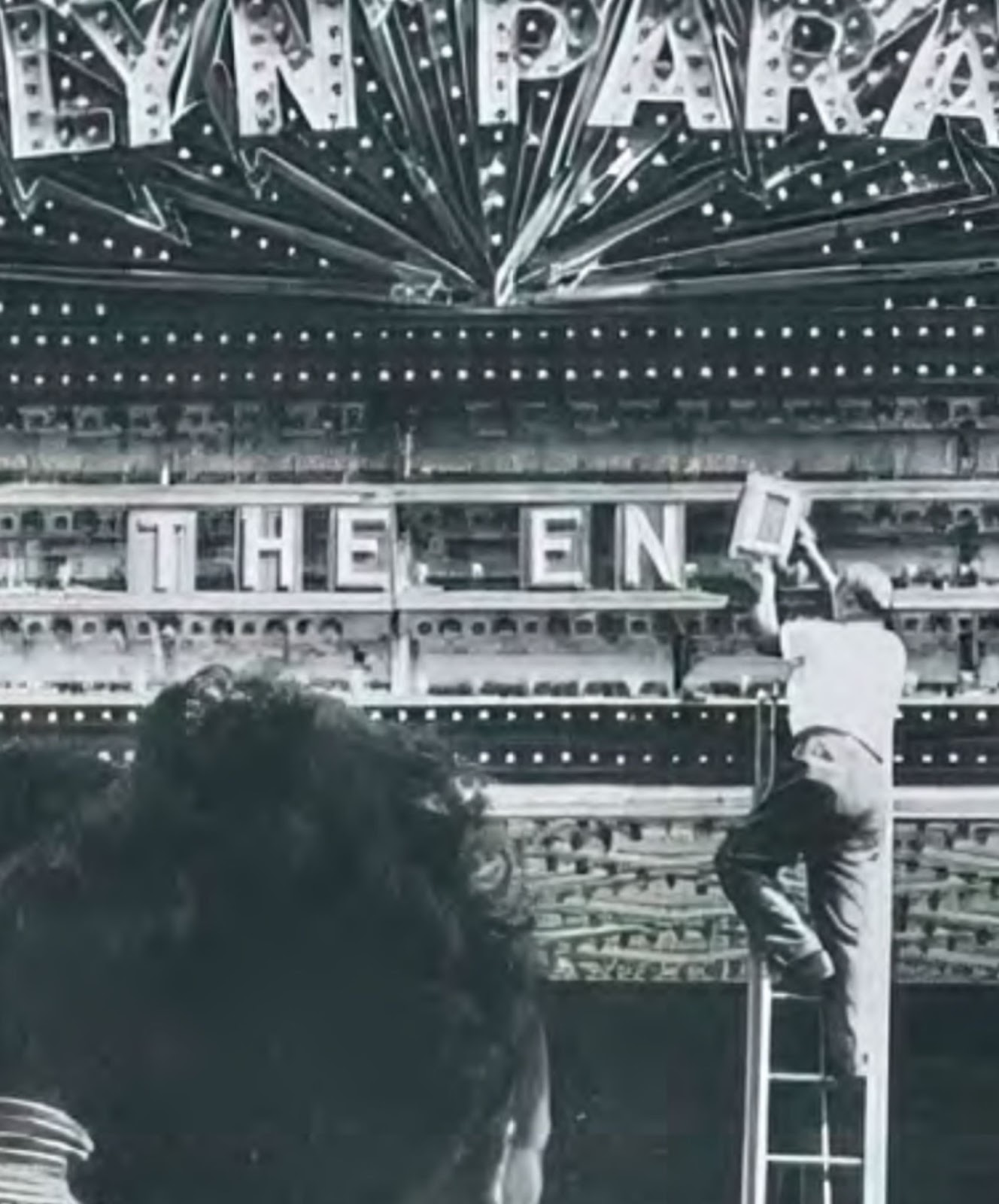
It so happened that in 1950, Long Island University managed to acquire the Brooklyn Paramount building. And what’s a university without its own campus, so the office block of the building was turned into the Brooklyn Campus. And after the movie theater finally closed in 1962, the new owners took over the theater part of the building. First, they removed two giant signs and a sign on the roof. The tent above the corner entrance was dismantled, and the entrance to the lobby at the corner was closed, after which a new one was built in its place.
The changes also affected the main lobby, which began to serve as a student canteen, and the spacious halls were used as conference rooms and offices. The auditorium was also affected.
First, the sloping floor was leveled. This was done in order to set up a basketball court. The mezzanine was dismantled altogether. Instead, the rear part of the large-scale balcony was converted into office space. The building reopened in 1962 as the Harold and Maria Schwartz Athletic Center. It was later renamed Metcalfe Hall.
Now, almost 100 years after it was built, this entertainment palace is being reborn as a home for multi-genre sensory spectacles and state-of-the-art sound. It’s been a long time coming, and finally, in 2024, Brooklyn Paramount will reopen for its original purpose. This was made possible after millions of dollars of investment and years of renovation by Live Nation.
After its revival, Brooklyn Paramount sees one of its main tasks as fostering a new generation of actors. It also wants to remain an unforgettable legend in Brooklyn.
Sources: