


Brooklyn’s theaters have entertained residents for almost as long as the city has existed. Before the invention of cinema, theater reigned supreme as the city’s primary form of entertainment. It’s no surprise—within the walls of a theater, one could experience nearly everything that brought joy, lifted spirits, and inspired emotions, often romantic ones. From symphonies and operas to serious dramas, comedies, vaudeville, and minstrel shows, the theatrical world had something for everyone. For a deeper look at how Brooklyn’s theater scene evolved in the 19th century, visit brooklyn-trend.com.
The First Documented Play
However, things didn’t start off as lively and exciting as they later became. The first Dutch colonists, who settled the area in 1624 after displacing the indigenous Lenape people, were devout Protestants with little interest in theater. Even after the English seized control in 1664, it took over a century before New York saw its first professional performance. Despite Britain’s rich theatrical traditions, New York’s cultural climate remained largely resistant to such entertainment.
By the early 1700s, the primary form of leisure in the city was heavy drinking. Eventually, the local elite sought an alternative, and in 1696, a coffeehouse named The King’s Arms opened on Broadway, just south of Trinity Church. Some scholars speculate that this venue may have hosted the city’s earliest theatrical performances—if so, they were likely informal, amateur productions. However, no written records of such performances have survived.
Things changed in September 1732, when a troupe of actors from London staged a series of plays on the empty second floor of a local building. This makeshift venue was large enough to accommodate around 400 spectators.
The first documented professional performance in New York took place on December 6, 1732, when the same troupe presented a comedy titled The Recruiting Officer. The playhouse remained in use for nearly a decade, with advertisements referring to it simply as “The Playhouse.” Over time, other troupes performed in different improvised venues, though no detailed records of their productions have survived. Thus, New York’s theatrical scene began in an undocumented, informal manner, laying the groundwork for future developments.
Brooklyn’s First Theater
As for Brooklyn’s own theatrical history, it traces back to the 19th century, when the area was still an independent city. The borough’s first theater, the Washington Theater, was built in 1808 on Washington Street. With a seating capacity of 1,500, it became a popular venue for plays, operas, and concerts.
Brooklyn’s theater scene truly began to flourish in the mid-19th century. A pivotal moment came with the opening of the Brooklyn Academy of Music (BAM) in 1861. Originally conceived as a multipurpose venue for concerts, lectures, and theatrical productions, BAM quickly became a major cultural hub, attracting some of the biggest names in entertainment.
Like any major city, Brooklyn saw theaters emerge in various neighborhoods throughout the 19th century. By the late 1800s, the borough had even developed its own theater district, centered around the intersection of Flatbush Avenue and Fulton Street, extending into nearby downtown streets.
Many early Brooklyn theaters were located near City Hall, as this was the borough’s primary civic, commercial, and social center. The importance of Brooklyn’s theatrical culture in the 19th century is evident in local press coverage. For instance, on April 25, 1871, The Daily Eagle reported on the construction and grand opening of a new theater at the corner of Washington Street and Johnson Street.
Today, Washington Street is known as Cadman Plaza East, and Johnson Street cuts through Cadman Plaza. That historic theater was built right across from the post office, which was constructed decades later, just a block from City Hall. The Daily Eagle referred to the venue as “our Thespian temple” and devoted extensive coverage to its architecture, seating arrangements, stage, and exterior.
From Bathhouse to Playhouse
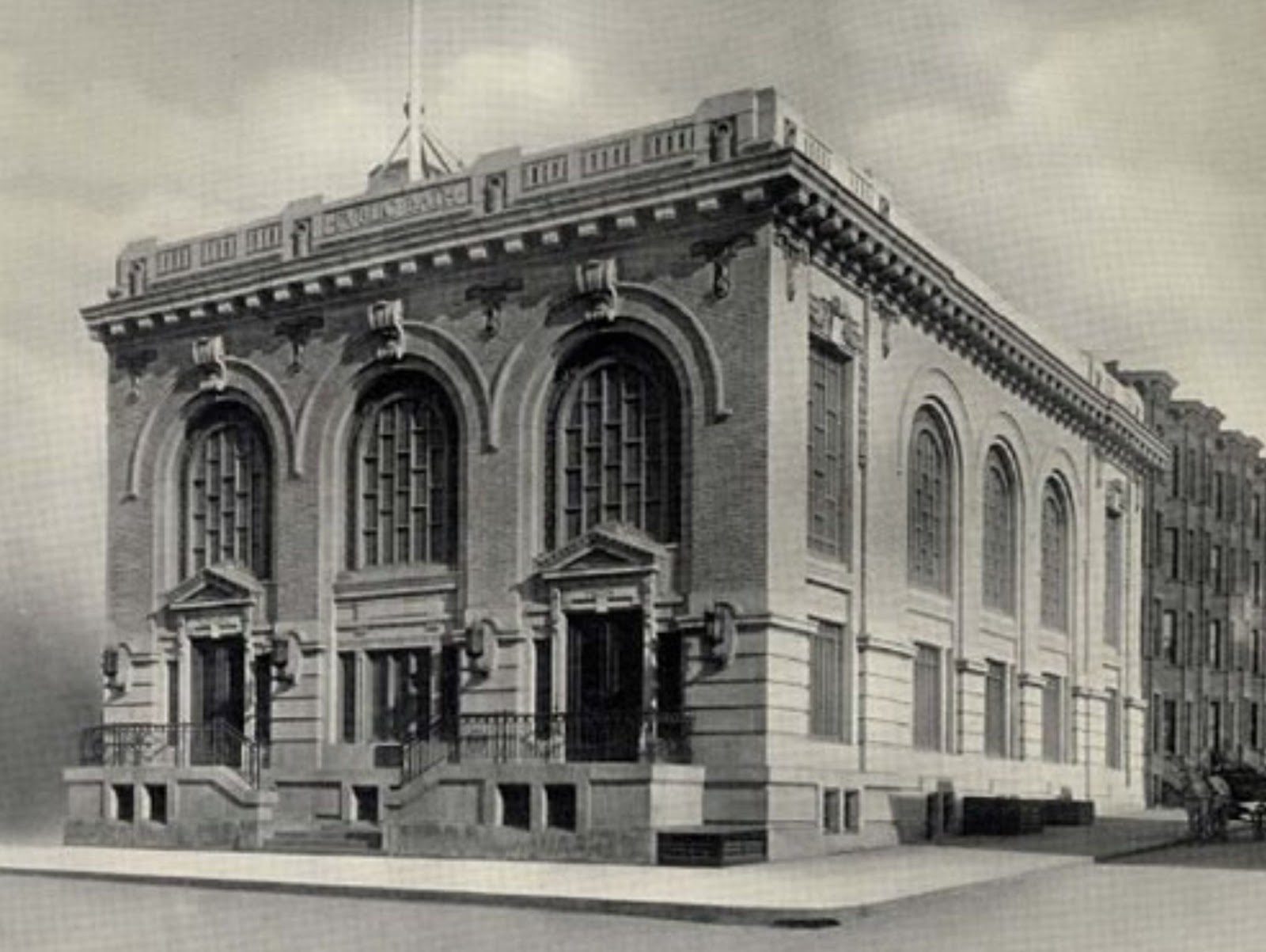
The building was owned by the Brooklyn Building Association and managed by Sara G. and Frederick B. Conway, both seasoned theater professionals. The venue could accommodate 1,600 spectators and was conveniently located near ferry terminals, making it easy for Manhattan theatergoers to attend performances in Brooklyn and return home the same evening.
Another notable venue was the Brooklyn Lyceum, built in 1908. Originally a public bathhouse, it was later converted into a theater. Over the years, the Lyceum hosted a variety of events, including plays, concerts, and even circus performances.
With the advent of cinema, theaters began adapting their spaces for film screenings, or entirely new movie palaces were constructed. However, most of these venues retained a stage for live performances. One of Brooklyn’s most remarkable movie palaces was the Kings Theatre.
The Kings Theatre – A Crown Jewel of Brooklyn
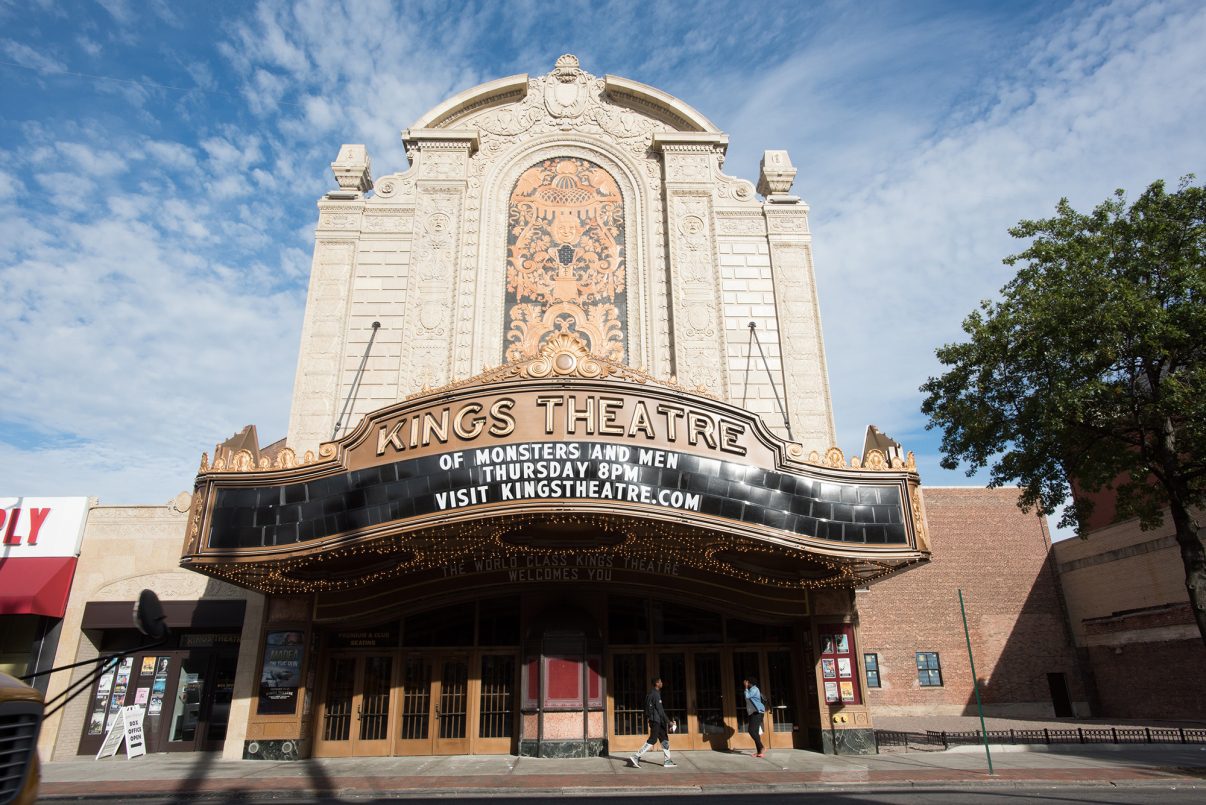
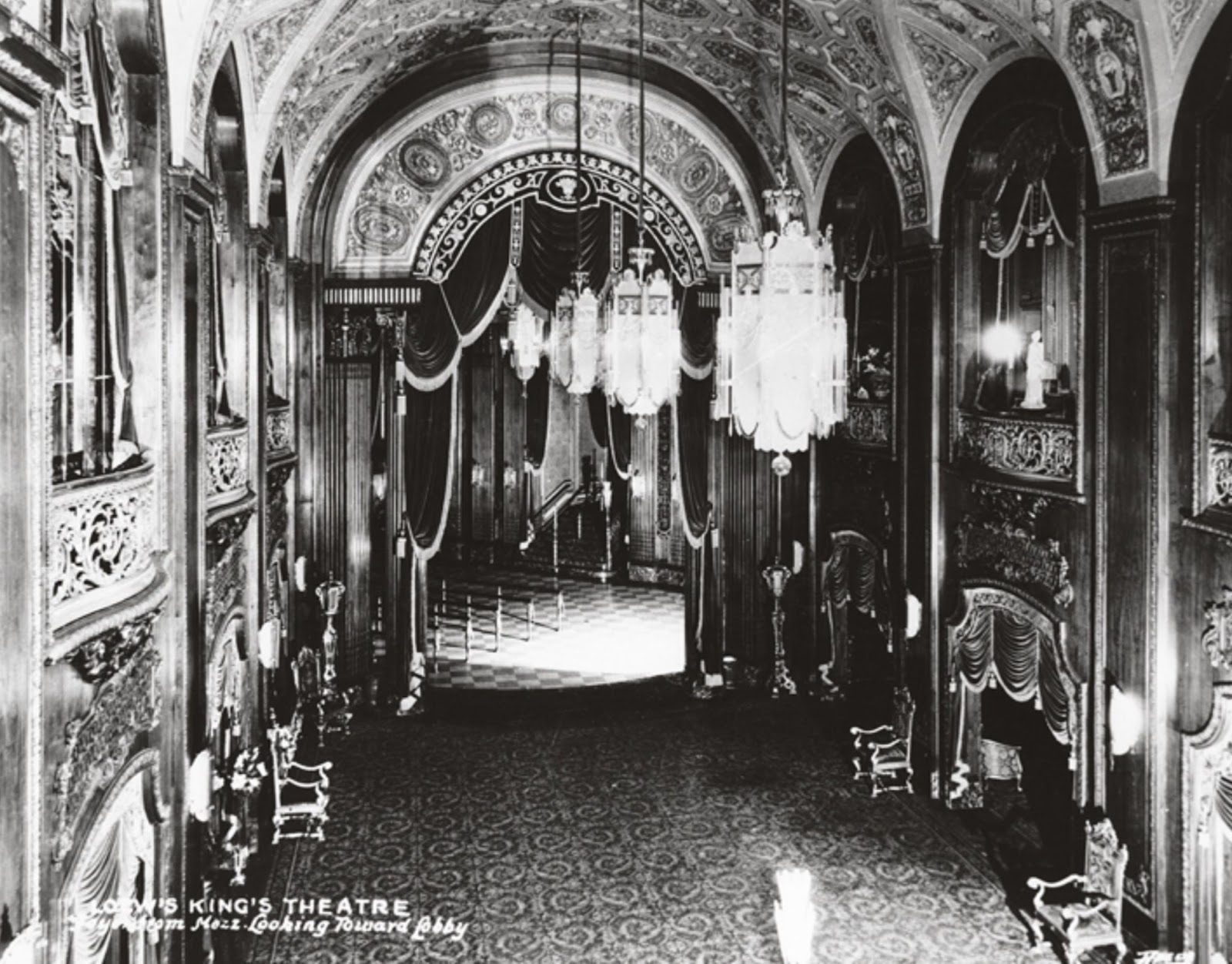
Opened in 1929, Kings Theatre was designed as a movie palace by the renowned architectural firm Rapp and Rapp, responsible for numerous theaters across the country. Located on Flatbush Avenue, Kings Theatre was built during the golden age of cinema and stood out as one of the largest and most opulent venues of its time.
With a seating capacity of 3,676, Kings Theatre featured stunning interiors adorned with grand chandeliers, marble columns, and sweeping staircases. The theater was equipped with state-of-the-art technology, including a Wurlitzer organ and a projection system capable of screening both silent and sound films. For decades, it was a beloved destination for Brooklyn’s moviegoers.
A Decline and a Grand Revival
However, with the rise of television and the decline of movie palaces in the 1950s, Kings Theatre fell into disrepair. It closed in 1977 and remained abandoned for over three decades.
Following a massive $95 million renovation that took more than two years, Kings Theatre reopened in 2015 as a performing arts venue. Today, it hosts world-class musicians, comedians, and theatrical productions, reclaiming its place as a cultural landmark.
Brooklyn’s theater scene has played a vital role in shaping the borough’s cultural identity. Today, several historic theaters still stand, representing some of the oldest and most famous performance venues in the city. While some await restoration, others have been revived as testaments to the enduring appeal of live performances and the importance of preserving cultural heritage.