


St. Ann’s Warehouse is a renowned performing arts institution in Brooklyn. It all began in 1980 when St. Ann’s and the Holy Trinity Church on Montague Street was transformed into a venue for classical music performances. Initially known as “Arts at St. Ann’s,” the venue used revenue from stage performances to help fund the building’s restoration. Read more about St. Ann’s Warehouse on brooklyn-trend.com.
The Beginning of a Creative Journey
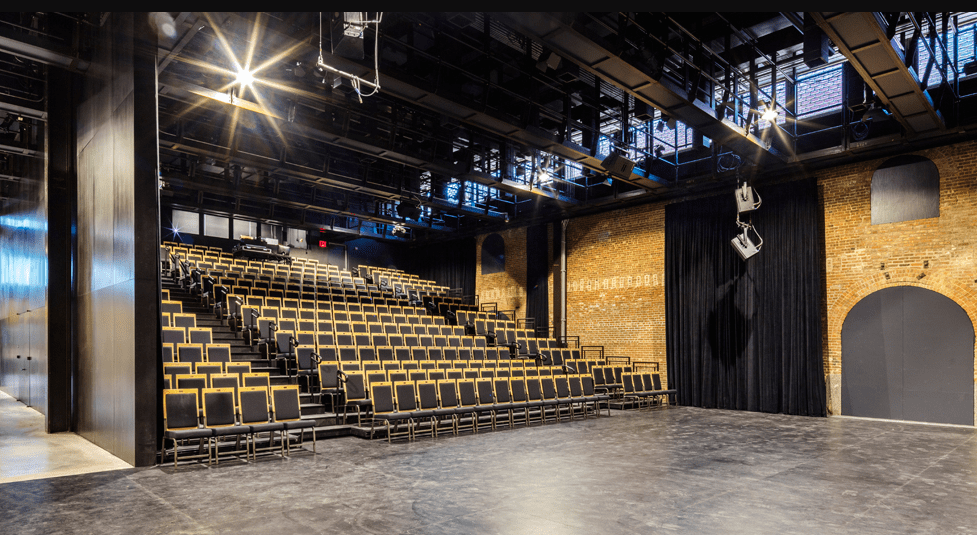
The original home of the arts was the National Historic Landmark St. Ann’s and the Holy Trinity Church in Brooklyn Heights. For 21 years, the neo-Gothic church hosted numerous concerts and theatrical performances. Additionally, the organization raised approximately $4 million to restore the building, including its historic stained-glass windows created by William Jay Bolton—the first stained-glass windows ever made in America.
From its inception, St. Ann’s developed a reputation as a consistent innovator, fostering multidisciplinary theatrical collaborations, thematic concert presentations featuring multiple artists, and the creation of new performances in collaboration with puppet theaters.
Starting in 1980, much of St. Ann’s early programming focused on classical music, including choral and operatic performances, lunchtime organ concerts, and appearances by ensembles such as Tashi and the Academy of Ancient Music. However, an unexpected breakthrough came in 1983 with the production of the first American puppet opera—a performance of Rossini’s The Barber of Seville, directed by Amy Trompeter in collaboration with the Brooklyn Opera Society.
Under the direction of artistic director Charles Wadsworth, Lincoln Center’s Chamber Music Society performed concerts at St. Ann’s between 1981 and 1983. These concerts later led to the Sunday Bach Cantata series, curated by Fred Sherry, a cellist with the Chamber Music Society. The seven-year-long Bach Cantata series played a crucial role in shaping St. Ann’s approach to music programming and helped establish the reputation of The Orchestra of St. Luke’s, a then-emerging ensemble.
As artists took notice of St. Ann’s commitment to ambitious and wide-ranging performances, their participation helped elevate the institution’s international reputation under the leadership of founding artistic director Susan Feldman and program director Janine Nichols. In 1989, record producer Hal Willner brought Marianne Faithfull to St. Ann’s for a pair of concerts, further enhancing its prestige.
The Seven Deadly Sins
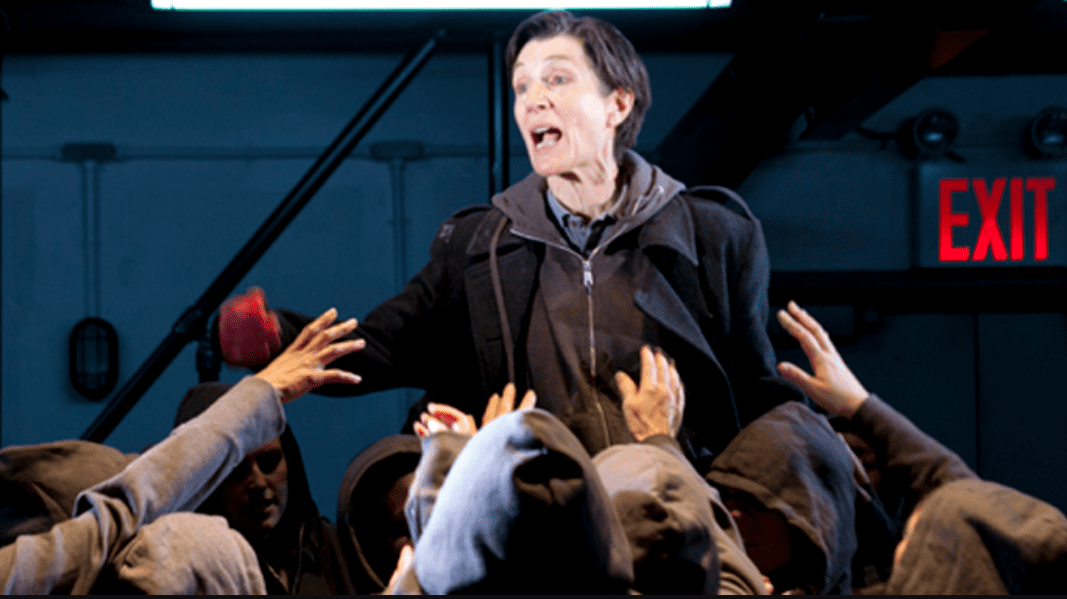
Faithfull’s performance of The Seven Deadly Sins led to the formation of the vocal group Hudson Shad and the award-winning In the Time of the Comedian Harmonists (1992), directed by Susan Feldman. Even Rolling Stone recognized St. Ann’s as “a guiding light of New York’s avant-garde rock scene.”
In 1991, Willner and St. Ann’s presented the first of their multi-artist tribute performances, Greetings from Tim Buckley, which introduced the late Jeff Buckley to the world. This was followed by various Halloween-themed concerts and the ambitious Harry Smith Project in 1999, featuring renowned artists like Nick Cave and Van Dyke Parks.
St. Ann’s continued to build on this success with a series of themed concerts under the musical direction of Peter Holsapple.
Throughout its history, St. Ann’s has presented a diverse range of concerts spanning rock, jazz, world music, and roots music. Some of its most memorable performances include Les Mystères Des Voix Bulgares (1988), Aaron Neville’s first solo performances (1988–1989), Marta Sebestyen with Muzsikas (1989), and shows featuring John Cale, Bob Neuwirth, and Mary Margaret O’Hara. Additionally, St. Ann’s played a key role in staging David Byrne’s orchestral music for The Forest at Town Hall in 1992.
The Puppet Theater Invasion
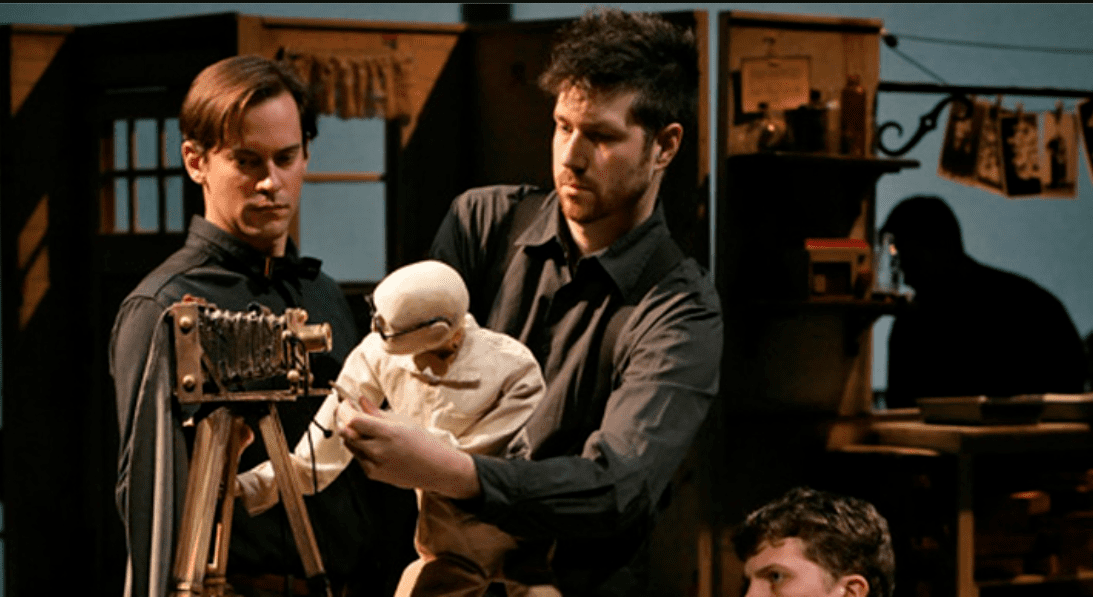
Beyond music, St. Ann’s has also been a key venue for puppet theater. It was home to the Bread and Puppet Theater and hosted productions by renowned puppeteer Lee Breuer, whose 1992 adaptation of Peter and Wendy became a major success. Jenny Geiser, a prominent figure in the puppetry world, led The Lab, an experimental incubator for artists working in puppet theater. The Lab celebrated its 10th anniversary in 2007.
Following a move to a former spice warehouse at 38 Water Street in DUMBO shortly after September 11, 2001, St. Ann’s continued its work under the new name St. Ann’s Warehouse. Despite the relocation, its unforgettable performances blending theater and rock ‘n’ roll remained a signature feature. In 2004, St. Ann’s Warehouse and artistic director Susan Feldman received the Village Voice Obie Award in honor of Ross Wetzsteon.
The venue also earned four Drama Desk Award nominations for its productions of Hell House by Les Frères Corbusier and Daniel Kramer’s high-energy adaptation of Woyzeck. These accolades were no coincidence—throughout its existence, St. Ann’s has presented a vast array of concerts, including rock, jazz, world, and roots music, further solidifying its reputation as one of Brooklyn’s premier performance spaces.